Preserving Your Retro Game Collection: 7 Key Strategies for 2026
Advertisements
The guide Preserving Your Retro Game Collection: 7 Key Strategies for Longevity in 2026 highlights essential methods for protecting classic titles from physical degradation.
This concise breakdown provides actionable strategies on climate control, hardware maintenance, and digital backups, offering collectors and historians the necessary tools to safeguard physical media and preserve gaming history for future generations.
Understanding the Threats to Your Retro Game Collection
The challenges facing retro game collections are multifaceted, ranging from physical deterioration to technological obsolescence.
These threats can emerge from various sources, making a holistic approach to preservation absolutely essential for long-term viability.
Environmental factors, such as humidity and temperature fluctuations, pose significant risks to both physical media and console hardware.
Beyond environmental concerns, the inherent fragility of older components means that even ideal conditions cannot completely halt the aging process, necessitating careful handling and regular inspection.
Furthermore, the proprietary nature of many retro game formats complicates efforts to transfer or emulate these games on modern systems.
This combination of physical decay and technological barriers underscores the urgency of proactive preservation for anyone serious about preserving retro games.

Strategy 1: Optimal Environmental Control for Longevity
Maintaining a stable environment is arguably the most critical aspect of preserving retro games.
Fluctuations in temperature and humidity can cause irreversible damage to cartridges, discs, and console components, leading to material breakdown and data corruption.
Ideal conditions typically involve a cool, dry, and dark space with consistent temperature and humidity levels.
Collectors should aim for temperatures between 60-70°F (15-21°C) and relative humidity between 30-50% to mitigate the risks of mold, warping, and corrosion.
Utilizing dehumidifiers, air conditioners, and even archival-grade storage containers can create a microclimate that significantly extends the lifespan of your collection.
This controlled environment is fundamental to the long-term success of preserving retro games from environmental degradation.
Humidity and Temperature Regulation
Controlling humidity is crucial, as high moisture levels promote mold growth and rust on metal components, while excessively low humidity can cause plastics to become brittle and crack.
A hygrometer can help monitor conditions, allowing for timely adjustments to prevent damage.
Sudden temperature changes are also detrimental, causing materials to expand and contract, which can lead to stress fractures in circuit boards and disc warping.
Consistency is key, avoiding spaces like attics or basements that are prone to extreme variations.
Investing in climate control systems or even simple desiccants for enclosed storage can make a substantial difference. These measures are foundational for anyone committed to preserving retro games against environmental threats.
- Monitor temperature and humidity with a reliable hygrometer.
- Maintain stable conditions: 60-70°F (15-21°C), 30-50% relative humidity.
- Avoid storing games in attics, basements, or direct sunlight.
Strategy 2: Proper Storage Solutions for Physical Media
Beyond environmental control, the physical storage of your retro games plays a vital role in their preservation. Incorrect storage can lead to scratches, dust accumulation, and structural damage, diminishing both playability and collector value.
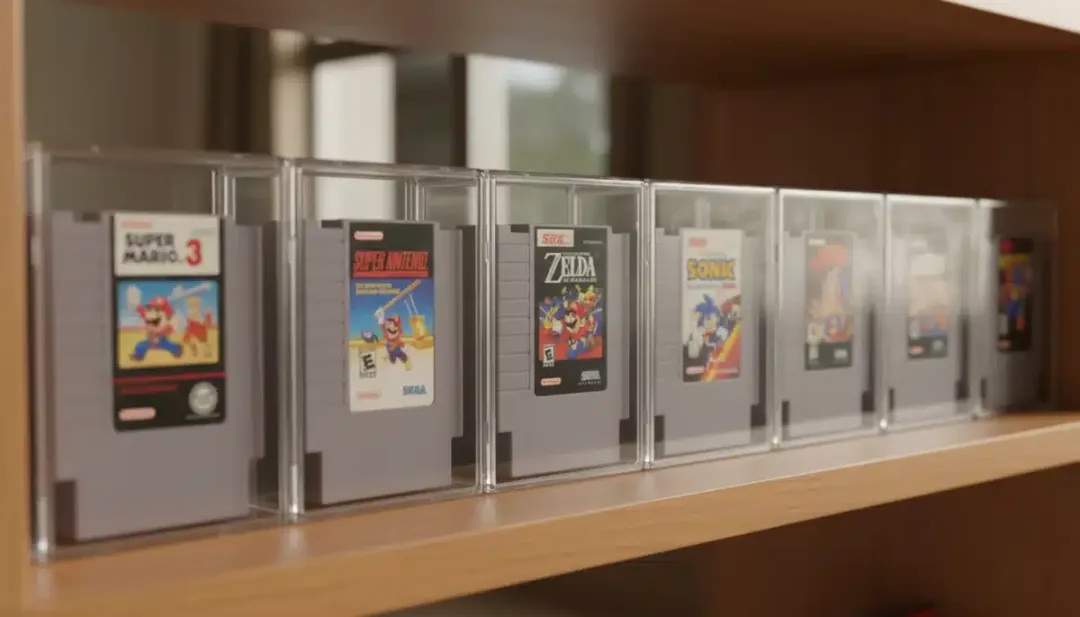
For cartridges, acid-free plastic protector cases are highly recommended to shield them from dust, UV light, and physical impact. These cases also help prevent label fading and moisture ingress, preserving the aesthetic integrity of the games.
Optical discs, such as CDs and DVDs, require individual jewel cases or high-quality disc sleeves to prevent scratches and warping.
Storing them vertically, rather than stacking, minimizes pressure and avoids potential damage to their reflective layers, which is crucial for preserving retro games on disc.
Original boxes and manuals should also be protected within archival-grade plastic bags or display cases to prevent creasing, tearing, and exposure to harmful pollutants.
This attention to detail ensures that all components of your collection remain in pristine condition.
Archival-Grade Protection
Using materials specifically designed for archival purposes is essential, as regular plastics can off-gas chemicals that accelerate degradation over time. Look for polypropylene or Mylar sleeves and cases, which are inert and safe for long-term storage.
For paper components like manuals and box art, acid-free backing boards can prevent bending and creasing, while UV-protective coatings on display cases can prevent fading from light exposure.
These specialized materials offer superior protection compared to standard storage options.
Proper shelving that supports the weight of the collection without bowing is also important, as uneven surfaces can stress game boxes and cases. These considerations are integral to successfully preserving retro games for future enjoyment.
Strategy 3: Regular Maintenance and Cleaning Protocols
Even with optimal storage, regular maintenance and cleaning are necessary to keep your retro games functioning correctly. Dust, grime, and oxidation can accumulate on contacts and surfaces, leading to read errors and system malfunctions.
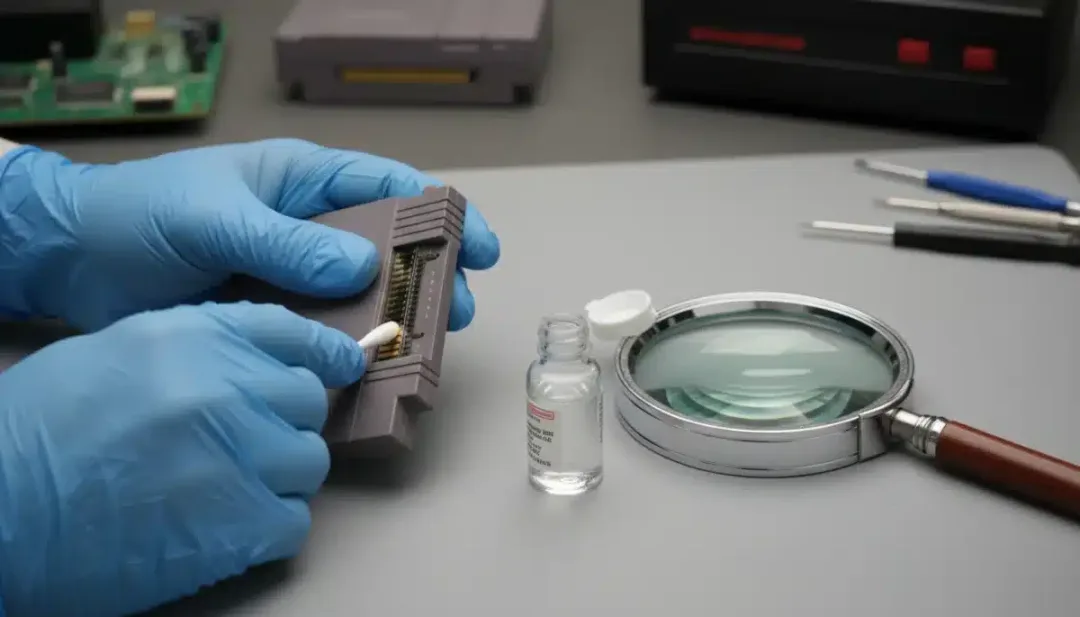
For cartridge-based games, cleaning the connector pins with isopropyl alcohol and cotton swabs can restore reliable contact with the console.
This simple procedure often resolves common issues like flickering screens and game crashes, extending the playability of the title.
Optical discs should be cleaned with a soft, lint-free cloth and a disc-specific cleaning solution, moving from the center outwards to avoid creating new scratches.
Proper cleaning prevents read errors and ensures the disc continues to function optimally, a key part of preserving retro games.
Consoles themselves also benefit from periodic cleaning, including dusting vents and ports to prevent overheating and ensure proper airflow. This proactive approach minimizes wear and tear on both games and hardware.
Safe Cleaning Practices
When cleaning, always use appropriate materials and techniques to avoid causing further damage. Abrasive cloths or harsh chemicals can permanently harm delicate surfaces and electronic components, rendering games unplayable.
For sensitive electronics, specialized contact cleaners designed for circuit boards can be used, but always ensure they are non-conductive and evaporate cleanly.
Always disconnect power from consoles before performing any internal cleaning or maintenance.
Adhering to these safe cleaning practices is vital for extending the functional life of your collection. This meticulous attention to detail is a cornerstone of successfully preserving retro games for generations to come.
- Clean cartridge contacts with isopropyl alcohol and cotton swabs.
- Use soft, lint-free cloths and disc-specific solutions for optical media.
- Regularly dust console vents and ports for optimal airflow.
Strategy 4: Addressing Battery Backups and Internal Components
Many retro game cartridges, particularly those from the 8-bit and 16-bit eras, rely on internal batteries to save game progress. These batteries have a finite lifespan, typically 10-20 years, and will eventually fail, leading to lost save data.
Replacing these internal batteries requires basic soldering skills and the correct replacement battery (usually a CR2032 or CR1616 with solder tabs).
While this can be intimidating, numerous guides and tools are available for collectors to perform this maintenance safely.
Beyond save batteries, other internal components like capacitors in consoles can also fail over time, leading to audio/video issues or complete system failure.
Proactive recapping of older consoles by a qualified technician can significantly extend their operational life, an essential step in preserving retro games and their playable platforms.
Regular inspection of cartridges and consoles for signs of battery leakage or component degradation can help identify potential issues before they become critical.
Early intervention can save valuable games and hardware from permanent damage.
Proactive Component Replacement
Identifying games with save batteries and scheduling their replacement before they fail is a smart proactive step. This prevents unexpected data loss and ensures games remain fully functional, protecting valuable in-game progress.
For consoles, researching common failure points for specific models can inform targeted maintenance. For example, some console models are known for specific capacitor issues, making proactive replacement a wise investment for long-term reliability.
These detailed maintenance practices are crucial for preserving retro games in their original playable state, ensuring that the hardware remains as robust as the software it runs.
Strategy 5: Creating Digital Backups and Emulation
While physical preservation is paramount, creating digital backups of your retro game collection offers an invaluable layer of security against unforeseen damage or loss.
This strategy ensures that even if physical media degrades, the game’s data remains accessible.
Tools and devices exist that allow collectors to dump ROMs from cartridges and ISOs from optical discs, creating exact digital copies.
These backups can then be stored on modern hard drives or cloud storage, protecting them from physical vulnerabilities.
Emulation software provides a means to play these digital backups on contemporary computers or dedicated emulation devices, bypassing the need for original hardware.
This not only ensures playability but also allows for enhancements like improved graphics and save states, contributing to the broader effort of preserving retro games.
It is important to note that the legality of creating backups and using emulators varies by region and specific circumstances. Collectors should always be aware of local copyright laws when undertaking these activities.
The Role of Emulation in Preservation
Emulation serves as a critical tool for historical preservation, allowing current and future generations to experience games that might otherwise be lost due to hardware failure or media degradation.
It democratizes access to retro games, making them available to a wider audience.
Beyond simple playability, emulation projects often involve extensive research into original hardware and software, leading to a deeper understanding of game development history.
This academic aspect further solidifies the importance of digital backups for preserving retro games.
However, emulation is not a perfect substitute for original hardware, as it may not always replicate the exact feel or nuances of playing on a vintage console.
Therefore, it should be seen as a complementary strategy rather than a replacement for physical preservation.
Strategy 6: Documenting Your Collection for Future Reference
Comprehensive documentation of your retro game collection is an often-overlooked but crucial preservation strategy.
This involves cataloging each item, its condition, and any unique characteristics, creating a detailed record for insurance, historical, or personal purposes.
A detailed inventory should include titles, platforms, serial numbers, purchase dates, condition ratings, and photographs of each item.
This information can be stored in spreadsheets, specialized database software, or online collection management tools.
Such documentation is invaluable in the event of loss due to theft or disaster, aiding insurance claims and recovery efforts.
It also serves as a historical record, tracking the provenance and evolution of your collection, reinforcing the value of preserving retro games.
For rare or particularly valuable items, consider having them professionally appraised and authenticated. This adds another layer of credibility and value to your documented collection, making it a robust record for posterity.
Detailed Inventory and Photography
Taking high-resolution photographs of each game, console, and accessory from multiple angles captures its current state, including any wear or unique features. These visual records are indispensable for proving ownership and condition.
Include details such as box art variations, manual inserts, and any included peripherals.
The more comprehensive your documentation, the more valuable it becomes as a reference point for future collectors or researchers interested in preserving retro games.
Regularly updating your inventory ensures that it remains current and accurate, reflecting any additions, subtractions, or changes in item condition.
This ongoing process is vital for maintaining an effective and reliable record of your collection’s history.
Strategy 7: Community Engagement and Knowledge Sharing
The retro gaming community is a vibrant source of knowledge and support for preservation efforts. Engaging with fellow collectors, forums, and archival organizations can provide invaluable insights and resources for preserving retro games.
Sharing experiences, best practices, and technical solutions within the community helps everyone overcome common preservation challenges.
Many individuals and groups dedicate themselves to documenting, restoring, and even developing new hardware to keep retro games alive.
Participating in local or online retro gaming groups allows you to learn from others’ successes and failures, access specialized tools or services, and contribute to a collective effort.
This collaborative approach strengthens the overall movement to safeguard gaming history.
Supporting initiatives focused on digital archiving and hardware reverse-engineering also contributes significantly to the longevity of retro gaming.
These collective efforts extend far beyond individual collections, benefiting the entire community.
Collaborative Preservation Efforts
Many non-profit organizations and volunteer groups are actively involved in archiving video games, documenting hardware, and creating open-source preservation tools.
Supporting these initiatives, whether through donations or volunteer work, helps advance the field.
Attending conventions or expos focused on retro gaming provides opportunities to connect with experts, discover new preservation techniques, and see rare items firsthand.
These events foster a sense of community and shared purpose in preserving retro games.
By engaging with the broader retro gaming ecosystem, collectors not only protect their own assets but also contribute to a larger cultural movement.
This shared passion ensures that the legacy of classic video games endures for future generations to explore and enjoy.
| Key Strategy | Brief Description |
|---|---|
| Environmental Control | Maintain stable temperature and humidity (60-70°F, 30-50% RH) to prevent degradation. |
| Proper Storage | Use acid-free cases for cartridges and individual sleeves for discs; store vertically. |
| Regular Maintenance | Clean contacts with isopropyl alcohol and dust consoles to ensure functionality. |
| Digital Backups | Create ROM/ISO copies and utilize emulation for long-term data security and playability. |
Frequently Asked Questions About Retro Game Preservation
Why is environmental control so important for retro games?▼Environmental control is crucial because fluctuating temperatures and humidity can cause physical damage like warping, mold, rust, and brittleness in game cartridges, discs, and console components. Maintaining stable conditions (cool, dry, dark) significantly extends the lifespan of your collection, preventing irreversible degradation and ensuring the continued integrity of your beloved titles.
What are the best storage solutions for different types of retro media?▼For cartridges, use acid-free plastic protector cases to shield against dust, UV light, and physical impact. Optical discs should be stored individually in jewel cases or quality sleeves, placed vertically to prevent warping. Original boxes and manuals benefit from archival-grade plastic bags to protect against creasing and environmental pollutants, preserving their aesthetic value.
How often should I clean my retro game cartridges and consoles?▼Regular maintenance is recommended, especially if games are played frequently. Cartridge contacts should be cleaned with isopropyl alcohol and cotton swabs as needed, typically when read errors occur. Consoles benefit from periodic dusting of vents and ports, perhaps every few months, to prevent overheating and maintain optimal airflow, ensuring consistent performance for preserving retro games.
Is it legal to create digital backups of my retro games?▼The legality of creating digital backups (ROMs/ISOs) for personal use varies by jurisdiction. In some regions, it is permissible to create a backup copy of software you legally own for archival purposes. However, distributing these backups is generally illegal. Always consult local copyright laws to ensure compliance when undertaking digital preservation efforts for your retro games.
What role does the retro gaming community play in preservation?▼The retro gaming community is vital for preservation, serving as a hub for knowledge sharing, technical support, and collaborative initiatives. Engaging with fellow collectors, forums, and archival organizations provides access to best practices, specialized tools, and collective efforts to document and restore games. This community involvement strengthens the overall movement to safeguard gaming history and ensure the longevity of retro games.
What This Means for Your Collection’s Future
Implementing these seven strategies provides a robust framework for preserving retro games, extending their lifespan and ensuring their playability for years to come.
The proactive measures detailed here address both physical and digital vulnerabilities, offering comprehensive protection for your cherished collection.
By adopting these methods, collectors not only safeguard their investments but also contribute significantly to the broader effort of cultural preservation within the gaming world.
To access specific guidelines on climate control, cartridge cleaning, and physical preservation techniques, you can read the step-by-step breakdown on how to store retro video games properly to prevent damage through GameRepair.
The future of retro gaming hinges on these dedicated efforts, ensuring that iconic titles remain accessible and enjoyable for generations.