Challenges for Game Developers in 2026: An Exclusive Report

The Exclusive Report: The Unforeseen Challenges Facing Game Developers in the Current Economic Climate of Early 2026 highlights a critical turning point for an industry once considered recession-proof.
As developers grapple with market saturation, high interest rates, and the rapid integration of disruptive technologies, this analysis provides the objective data needed to navigate these fiscal hurdles.
Understanding these shifts is now essential for any studio aiming to transform these unprecedented economic headwinds into a sustainable competitive advantage.
Global Economic Downturn and Its Impact
The global economy in early 2026 is characterized by persistent inflationary pressures and cautious consumer spending.
This environment directly affects the gaming sector, reducing disposable income for many potential players and making investment capital harder to secure for development studios.
Central banks worldwide continue to grapple with economic instability, leading to higher borrowing costs and a general tightening of financial markets.
For game developers, this means that securing loans for new projects or expanding existing operations has become significantly more challenging and expensive.
As a result, many smaller and independent studios are finding it increasingly difficult to compete, facing a stark choice between scaling back ambitions or risking financial insolvency.
The ripple effect extends to larger publishers who are also re-evaluating their portfolios and investment strategies in this volatile period.
Venture Capital Contraction
Venture capital funding, once a robust lifeline for innovative game development startups, has seen a marked contraction.
Investors are now prioritizing profitability and proven track records over speculative new ventures, making it harder for emerging studios to secure initial funding.
This shift in investor sentiment means that even promising concepts struggle to gain traction without substantial upfront capital.
The drying up of early-stage funding could stifle innovation and reduce the diversity of games entering the market, impacting the broader industry ecosystem.
Studios are forced to rely more on self-funding or established publishing deals, which often come with stricter terms and less creative freedom. This situation underscores a significant challenge for game developers 2026.
Rising Operational Costs
Inflationary pressures are driving up the costs of essential resources for game development, including talent, software licenses, and hardware.
Salaries for skilled developers are increasing, while the price of specialized tools and infrastructure continues to climb, directly impacting budgets.
These rising costs erode profit margins, especially for studios with fixed pricing models or those in long development cycles where initial budget estimates may no longer be accurate.
Managing these escalating expenses without compromising quality is a critical balancing act.
The need for efficient resource management and cost-cutting measures is becoming paramount, forcing developers to innovate not just in game design but also in their operational strategies.
Market Saturation and Discoverability Crisis
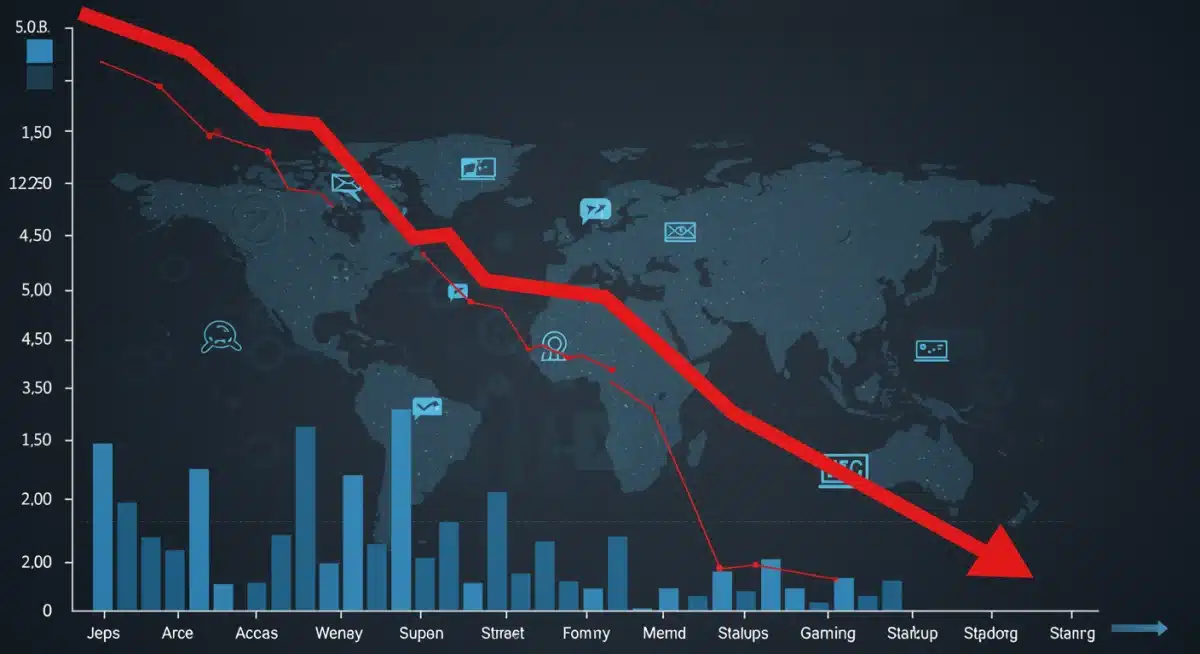
The sheer volume of games released across all platforms continues to grow, leading to an oversaturated market.
This creates a significant discoverability crisis, where even high-quality titles struggle to find their audience amidst the noise, making it one of the primary game developer challenges 2026.
Players are overwhelmed with choices, and their attention spans are increasingly fragmented across numerous games and other entertainment options.
This makes marketing and standing out from the crowd more expensive and less effective than ever before.
Developers are now forced to invest heavily in marketing and community building from the very early stages of development, adding another layer of financial burden and strategic complexity to their projects.
The Battle for Player Attention
With millions of games available, capturing and retaining player attention is a monumental task.
The market is not just saturated with new releases but also with established titles that continue to receive updates, further intensifying competition for playtime.
This battle extends beyond the game itself, encompassing social media presence, influencer marketing, and continuous engagement strategies.
Developers must now think beyond the game’s launch and focus on long-term player retention through live service models or compelling post-launch content.
The pressure to innovate in marketing and community management is as high as the pressure to innovate in game design, highlighting the evolving skill sets required from modern game developers.
The Indie Paradox
Independent game developers, known for their creativity and innovation, face a unique paradox: while digital distribution platforms offer unprecedented access to markets, they also expose indies to direct competition with AAA titles and a flood of other indie games.
This makes the Exclusive Report: The Unforeseen Challenges Facing Game Developers in the Current Economic Climate of Early 2026 particularly relevant to them.
Without the marketing budgets of larger publishers, indie games often rely on viral success or critical acclaim to break through.
However, achieving this is becoming increasingly difficult as the sheer volume of releases makes it harder for any single title to gain significant traction.
Many promising indie games are being overlooked, leading to financial instability for many small studios and a potential loss of diverse creative voices in the industry. This is a critical pain point within the game developer challenges 2026.
Technological Advancements and Skill Gaps
The rapid pace of technological advancement, while offering new creative possibilities, also poses significant challenges for game developers.
Keeping up with cutting-edge engines, new hardware, and emerging platforms requires continuous learning and investment in new skill sets.
Virtual reality (VR), augmented reality (AR), and artificial intelligence (AI) are no longer niche technologies but are becoming integral to next-generation gaming experiences.
Developers must adapt quickly to these changes or risk being left behind in a competitive market.
This continuous need for upskilling creates a talent gap, as experienced developers may lack knowledge in newer technologies, and new talent often requires extensive training.
AI Integration and Its Demands
Artificial intelligence is revolutionizing game development, from procedural content generation to sophisticated NPC behaviors and personalized player experiences.
While powerful, integrating AI effectively demands specialized knowledge and significant computational resources.
Developers need to understand machine learning principles, data science, and ethical AI considerations to leverage these tools responsibly and effectively. The learning curve can be steep, and the investment in AI infrastructure is substantial.
Failure to adopt AI could result in games that feel dated or less engaging compared to competitors, making AI proficiency a critical aspect of addressing game developer challenges 2026.
Cross-Platform Development Complexity
Players expect games to be accessible across multiple platforms – PC, consoles, mobile, and cloud streaming services.
Developing for such a diverse ecosystem significantly increases complexity, requiring specialized expertise and more robust testing protocols.
Each platform has its unique technical requirements, optimization challenges, and certification processes.
Managing these variations efficiently without compromising quality or increasing development timelines is a constant struggle for many studios.
This multi-platform demand inflates development budgets and extends production schedules, making effective project management and flexible development pipelines crucial for success in the current climate.
Talent Acquisition and Retention
Despite the economic pressures, the demand for highly skilled game development talent remains fierce.
Studios are battling for experienced programmers, artists, designers, and project managers, leading to escalating salary expectations and intense competition for the best minds.
Retaining top talent is equally challenging, as skilled professionals are often poached by competitors or lured by opportunities in other tech sectors. This high turnover can disrupt development cycles and lead to significant knowledge loss within teams.
Companies must invest more in employee benefits, professional development, and fostering positive work cultures to attract and keep their most valuable assets.

The Remote Work Paradigm Shift
The shift to remote and hybrid work models, while offering flexibility, has introduced new complexities in team management and collaboration.
Ensuring effective communication, maintaining team cohesion, and managing distributed development pipelines are ongoing challenges for studios worldwide.
Remote work also expands the talent pool globally but requires robust cybersecurity measures and adaptive project management tools to succeed.
The initial cost savings can sometimes be offset by investments in new infrastructure and processes.
Successfully navigating the remote work paradigm is crucial for talent acquisition and retention, as many developers now expect flexible arrangements as a standard benefit.
This is another layer to the game developer challenges 2026.
Burnout and Mental Health
The demanding nature of game development, often characterized by tight deadlines and long hours, contributes to high rates of burnout and mental health issues among developers.
This problem is exacerbated by economic uncertainty and the pressure to deliver flawless products in a competitive market.
Studios are increasingly recognizing the importance of addressing developer well-being, implementing initiatives to promote work-life balance and provide mental health support.
However, systemic issues often persist, leading to a loss of experienced professionals from the industry.
Prioritizing employee health is not just an ethical imperative but also a strategic one, as a healthy and motivated workforce is essential for sustained innovation and productivity.
This is closely related to the Exclusive Report: The Unforeseen Challenges Facing Game Developers in the Current Economic Climate of Early 2026.
Regulatory Scrutiny and Ethical Concerns
The gaming industry is facing increasing regulatory scrutiny, particularly concerning data privacy, monetization practices (such as loot boxes and microtransactions), and consumer protection.
Compliance with these evolving regulations adds another layer of complexity and cost for game developers.
Ethical considerations surrounding AI, content moderation, and accessibility are also becoming more prominent.
Developers must navigate these complex issues to maintain player trust and avoid reputational damage, which can be particularly sensitive for the game developer challenges 2026.
Staying informed about international legal frameworks and proactively addressing ethical concerns is crucial for long-term success and sustainability in the global gaming market. This oversight is becoming a more significant factor for all studios.
Data Privacy and Compliance
Strict data privacy regulations, such as GDPR and CCPA, continue to evolve and expand globally.
Game developers must ensure their games and platforms are compliant, especially when collecting player data, managing accounts, and implementing online features.
Non-compliance can result in hefty fines and damage to player trust, making robust data security and privacy protocols essential. This requires ongoing investment in legal expertise and technical solutions to safeguard player information effectively.
The complexities of international data laws mean that developers targeting a global audience must meticulously plan their data handling strategies from the outset.
Monetization Ethics
The ethical implications of monetization strategies, such as loot boxes, battle passes, and aggressive microtransactions, are under intense public and regulatory debate.
Concerns about predatory practices and their impact on vulnerable players are leading to calls for stricter oversight.
Developers must find a balance between generating revenue and maintaining ethical practices that prioritize player well-being and satisfaction. Transparency in monetization mechanics and fair value propositions are becoming increasingly important.
Reputational risks associated with perceived unethical monetization can be severe, impacting game sales and player loyalty. Navigating these ethical waters is a delicate but crucial task for game developers 2026.
Shifting Consumer Expectations
Modern players have increasingly high expectations for game quality, performance, and post-launch support.
The rise of live-service games and constant updates has set a new standard, putting immense pressure on developers to deliver continuous content and flawless experiences.
Player communities are more vocal and connected than ever, with social media amplifying both praise and criticism. This means that even minor bugs or perceived missteps can quickly escalate into major controversies, demanding rapid responses and transparent communication from developers.
Meeting these elevated expectations while managing tight budgets and development cycles is a significant balancing act that defines many game developer challenges 2026.
Demand for Innovation and Quality
Players are constantly seeking novel experiences and groundbreaking innovations. Generic or derivative games struggle to capture attention, pushing developers to invest more in unique mechanics, compelling narratives, and cutting-edge graphics.
This demand for innovation often conflicts with budgetary constraints and time limitations, forcing difficult decisions about scope and ambition. High-quality production values are now almost a baseline expectation, regardless of studio size.
The pressure to consistently deliver fresh, high-quality content means that development teams must be at the forefront of creative and technical capabilities. This requires investing in R&D and fostering a culture of continuous improvement.
Live Service Game Evolution
The live service model, while lucrative, demands a continuous stream of new content, events, and community engagement.
This requires dedicated teams and long-term planning, transforming game development into an ongoing operational challenge rather than a one-off project.
Maintaining player engagement over months and years necessitates a deep understanding of player psychology, data analytics, and agile development methodologies. The risk of player fatigue or content droughts is ever-present.
Transitioning to successful live service models requires significant organizational and strategic shifts, posing a complex challenge for many traditional studios. This is an important consideration in the Exclusive Report: The Unforeseen Challenges Facing Game Developers in the Current Economic Climate of Early 2026.
| Key Challenge | Brief Description |
|---|---|
| Economic Instability | Rising costs and reduced investment capital due to global economic shifts. |
| Market Saturation | Intense competition and discoverability issues amidst a flood of new game releases. |
| Tech Adaptation | Keeping pace with AI, VR/AR, and cross-platform development demands. |
| Talent War | Fierce competition for skilled developers and high rates of burnout. |
Frequently Asked Questions About Game Developer Challenges in 2026
The primary economic challenge is the combination of persistent inflation and rising interest rates. This makes securing investment capital more difficult and expensive, while also increasing operational costs for studios. Consumer spending is also more cautious, directly impacting game sales.
Market saturation leads to a severe discoverability crisis. With countless games released daily, even high-quality titles struggle to gain visibility and player attention. This forces developers to invest more heavily in marketing, which further strains already tight budgets.
The rapid evolution of AI, VR/AR, and cross-platform development demands continuous upskilling and significant investment. Developers must adapt to these complex technologies to remain competitive, creating skill gaps and increasing development complexity and costs.
The demand for highly skilled game development talent outstrips supply, leading to intense competition and escalating salaries. Additionally, issues like burnout, mental health concerns, and the complexities of remote work contribute to high turnover, impacting project stability and knowledge retention.
Increasing regulatory scrutiny over data privacy and monetization practices, especially loot boxes, adds compliance costs and risks. Ethical considerations regarding AI and content moderation also demand careful navigation to maintain player trust and avoid reputational damage in a sensitive industry landscape.
Forward Look and Implications
The Exclusive Report: The Unforeseen Challenges Facing Game Developers in the Current Economic Climate of Early 2026 underscores a period of significant transformation for the gaming industry.
Studios must embrace agility, strategic financial planning, and a deep understanding of both technological and human factors to navigate these turbulent waters.
The next few years will likely see a consolidation in the market, with an emphasis on sustainable development practices and innovative approaches to player engagement.
Adapting to these game developer challenges 2026 will define the leaders of tomorrow’s gaming landscape.
For a comprehensive breakdown of how these trends—specifically AI and workforce shifts—are reshaping the sector, see the GDC 2026 State of the Game Industry report.