Esports Broadcasting Innovations for 2026: Enhancing Viewer Experience
Advertisements
The “Esports Broadcasting Innovations 2026” report reveals how Augmented Reality (AR), haptic feedback, and AI personalization are transforming spectating into an immersive, multi-sensory event.
With global audiences projected to surpass 600 million this year, broadcasters are ditching passive views for interactive, data-driven experiences that rival traditional sports.
This update breaks down the 3 technologies revolutionizing your screen: from AR overlays that project 3D game maps onto your coffee table to haptic rings and wearables that allow fans to “feel” in-game actions.
We analyze how AI now curates personalized highlight reels and camera angles in real-time, ensuring every fan has a tailored front-row seat to the action.
The Dawn of Immersive Broadcasting: A New Era for Esports
The esports landscape is on the cusp of a revolutionary transformation, driven by cutting-edge broadcasting innovations.
By 2026, viewers can anticipate an unprecedented level of engagement, moving beyond passive consumption to truly immersive experiences.
This evolution is not merely about higher resolutions or faster frame rates; it encompasses a holistic reimagining of how esports content is delivered and consumed.
The focus is on technologies that bridge the gap between the virtual arena and the viewer’s living room, making every match feel like a personal event.
Industry leaders and technology developers are investing heavily in research and development, recognizing the immense potential of enhancing viewer interaction and immersion.
These strategic moves aim to solidify esports’ position as a premier entertainment spectacle.
Augmented Reality (AR) Overlays: Redefining Live Data Presentation
Augmented Reality (AR) overlays are set to revolutionize how statistics, replays, and analytical insights are presented during live esports broadcasts.
This technology integrates digital information directly into the live video feed, creating a dynamic and informative viewing experience without cluttering the screen.
Imagine seeing real-time player statistics hovering above their in-game characters, or strategic map overlays that illuminate team movements and objective control in unprecedented detail.
AR takes static graphics and transforms them into interactive, contextual elements that deepen viewer understanding.

The implementation of AR in Esports Broadcasting Innovations for 2026 promises to make complex game mechanics and strategic decisions far more accessible to a broader audience, from casual viewers to hardcore fans.
AR’s Impact on Viewer Engagement
AR overlays enhance engagement by providing immediate, context-sensitive information. Viewers no longer need to switch between screens or rely solely on commentators for data interpretation; the information is presented visually and intuitively.
This direct integration of data points allows for a more fluid narrative during broadcasts, enabling commentators to focus on strategic insights rather than merely reciting numbers. It creates a richer, more visually appealing stream that captures attention.
- Real-time player stats displayed directly on screen.
- Dynamic map overlays showing team positioning and objective control.
- Interactive replays highlighting key moments with visual cues.
- Enhanced sponsor integration through immersive AR advertisements.
The development cycle for AR integration is rapid, with several proof-of-concept broadcasts already showcasing its potential.
By 2026, AR is expected to be a standard feature in major esports events, significantly elevating the production quality and viewer experience.
Haptic Feedback Integration: Feeling the Game
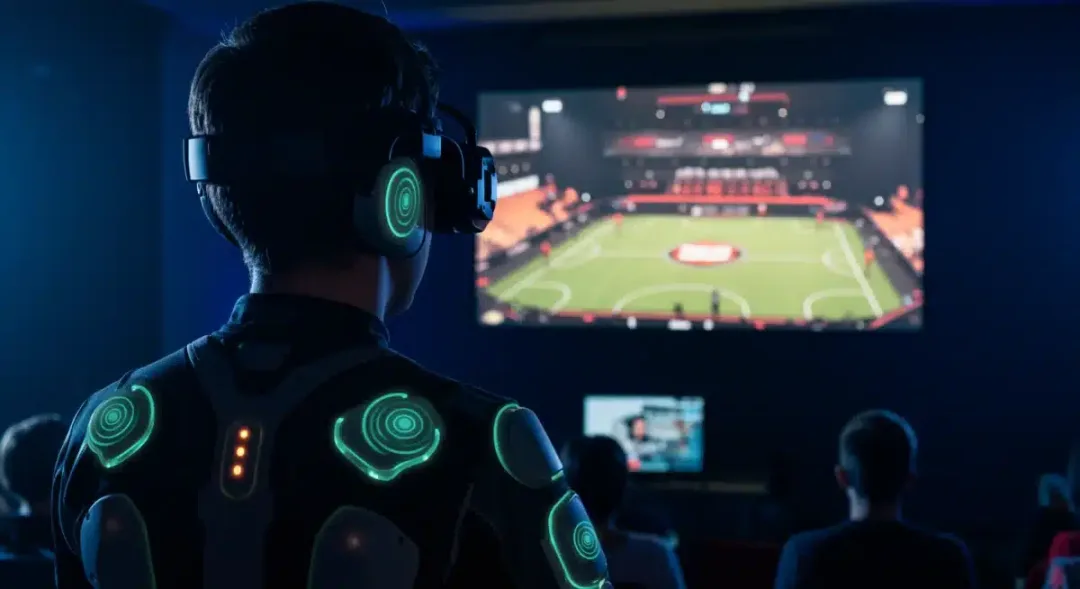
Haptic feedback integration represents a groundbreaking step towards truly immersive esports viewing, allowing fans to physically feel the intensity of the game.
This technology translates in-game actions, such as explosions, character abilities, or crowd reactions, into tactile sensations experienced by the viewer.
Specialized vests, chairs, or even peripherals equipped with haptic motors will provide a new dimension to spectating, deepening the emotional connection to the match.
This goes beyond traditional audio-visual experiences, offering a tangible link to the action unfolding on screen.
The potential of haptic feedback for Esports Broadcasting Innovations lies in its ability to amplify the adrenaline and excitement, making viewers feel as if they are part of the competitive environment itself.
Tactile Sensations and Emotional Resonance
By synchronizing haptic sensations with on-screen events, broadcasts can evoke stronger emotional responses from viewers. A well-timed vibration or force feedback can heighten tension during a clutch play or celebrate a decisive victory.
This technology is already seeing limited application in gaming, but its expansion into broadcasting offers new avenues for fan engagement. The goal is to make the viewing experience more visceral and memorable.
- Vibrations for in-game explosions or impacts.
- Subtle pulses for character abilities or ultimate activations.
- Tactile cues for crowd cheers or significant moments.
- Enhanced immersion for viewers at home or in dedicated viewing arenas.
While still in its early stages for widespread broadcasting, advancements in haptic technology are accelerating.
Experts predict that by 2026, affordable and accessible haptic devices will become a significant component of premium esports viewing packages, further solidifying the impact of Esports Broadcasting Innovations.
AI-Powered Personalized Streams: Tailoring Content to Every Fan
Artificial Intelligence (AI) is set to revolutionize esports broadcasting by enabling highly personalized viewing experiences.
This innovation moves beyond a single, universal broadcast, offering each viewer a stream tailored to their specific preferences, interests, and past viewing habits.
AI algorithms will analyze vast amounts of data, including player statistics, team strategies, individual viewer preferences, and social media trends, to curate dynamic content.
This means customized camera angles, personalized commentary, and relevant statistics delivered directly to the viewer.
The deployment of AI-powered personalized streams is a cornerstone of Esports Broadcasting Innovations, promising to retain and attract audiences by making every broadcast uniquely engaging.
Customized Content Delivery
Personalization allows viewers to choose what aspects of a match they want to focus on.
A viewer interested in a specific player might receive a stream that prioritizes that player’s perspective and statistics, while a tactical enthusiast might see more strategic map views.
This level of customization ensures that every fan gets the most out of their viewing experience, catering to diverse preferences within the esports community. It represents a significant departure from traditional linear broadcasting models.
AI can also dynamically adjust commentary based on viewer language preferences or even emotional tone. Imagine an AI commentator who understands your preferred level of detail or humor, making the broadcast feel incredibly personal.
- Dynamic camera angle selection based on viewer preference.
- Personalized statistical overlays focusing on favored players or teams.
- AI-generated commentary catering to specific languages or analytical depths.
- Curated highlights and instant replays based on individual viewing history.
The development of sophisticated AI models capable of real-time content curation is rapidly progressing.
By 2026, these personalized streams are expected to be a key differentiator for major esports platforms, significantly enhancing the viewer experience and driving the next wave of Esports Broadcasting Innovations.

Cloud-Based Production: Enhancing Flexibility and Global Reach
Cloud-based production workflows are rapidly becoming the backbone of modern esports broadcasting, offering unparalleled flexibility and scalability.
This shift allows production teams to operate remotely, collaborating seamlessly across geographical boundaries without the need for extensive on-site hardware.
By leveraging cloud infrastructure, broadcasters can spin up and down resources as needed, making it easier to cover multiple events simultaneously or scale up for major tournaments.
This agility translates into more diverse content and increased global accessibility for esports fans.
The adoption of cloud-based solutions is a critical enabler for many of the other Esports Broadcasting Innovations, providing the underlying technological framework for advanced features.
Operational Efficiency and Content Delivery
Cloud production streamlines various aspects of broadcasting, from live mixing and graphics integration to content distribution and archiving. This efficiency reduces costs and allows for faster turnaround times for highlights and VODs.
Furthermore, cloud infrastructure facilitates delivering high-quality streams to a global audience with minimal latency, ensuring a consistent and premium viewing experience regardless of location. It’s a game-changer for international esports circuits.
The ability to integrate new features and software updates swiftly through the cloud also means that broadcasting capabilities can evolve at a much faster pace, keeping up with the rapid innovation cycle of esports.
Interactive Fan Engagement Platforms: Beyond Passive Viewing
Interactive fan engagement platforms are evolving to create a more participatory viewing experience, transforming fans from passive observers into active participants.
These platforms integrate directly with broadcasts, offering features that allow viewers to influence the stream, interact with players, and engage with other fans in meaningful ways.
Think real-time polling that affects in-game commentary, virtual queues for Q&A sessions with pros, or even micro-transactions that trigger on-screen celebrations. These innovations foster a deeper sense of community and ownership among the audience.
The development of these platforms is central to the ongoing evolution of Esports Broadcasting Innovations, aiming to create memorable and unique interactions.
Building Community and Direct Interaction
These platforms aim to break down the traditional one-way communication of broadcasting, creating a dynamic feedback loop between the audience, broadcasters, and players. This direct interaction enhances the sense of belonging for fans.
Features like live chat moderation powered by AI, integrated fantasy leagues, and predictive gaming elements further immerse viewers. The objective is to make every broadcast a shared, interactive event.
The technological infrastructure supporting these platforms is becoming increasingly robust, ensuring seamless integration and real-time responsiveness.
This is crucial for maintaining viewer interest and participation throughout extended broadcast periods.
Ethical Considerations and Future Challenges in Esports Broadcasting
While the future of esports broadcasting is bright with technological advancements, it also presents a new set of ethical considerations and challenges.
Ensuring data privacy, combating potential AI biases, and maintaining fair competition in an increasingly data-rich environment are paramount concerns.
The deployment of highly personalized streams, for instance, raises questions about data collection and usage, requiring transparent policies and robust security measures.
Broadcasters must prioritize viewer trust as these technologies become more prevalent.
Addressing these challenges proactively is essential for the sustainable growth and widespread adoption of Esports Broadcasting Innovations, ensuring a positive experience for all stakeholders.
Navigating Data Privacy and Algorithmic Fairness
As AI becomes more integral to content curation, the fairness and transparency of algorithms come under scrutiny.
Ensuring that personalized streams do not create echo chambers or inadvertently exclude certain content is vital for a healthy ecosystem.
Furthermore, the increased collection of viewer interaction data, while beneficial for personalization, must be handled with the utmost care and in compliance with global privacy regulations. Trust is built on responsible data stewardship.
The industry must also address the potential for technological disparities among viewers, ensuring that advanced features do not alienate those with less access to cutting-edge hardware or high-speed internet. Inclusivity remains a core value.
| Key Innovation | Impact on Viewer Experience |
|---|---|
| Augmented Reality | Dynamic, contextual data overlays for deeper understanding. |
| Haptic Feedback | Physical sensations synchronized with in-game events for heightened immersion. |
| AI Personalization | Tailored streams with customized camera angles, commentary, and statistics. |
| Cloud Production | Increased flexibility, global reach, and operational efficiency for broadcasters. |
Frequently Asked Questions About Esports Broadcasting Innovations
What are the primary drivers behind these esports broadcasting innovations?▼The primary drivers are the pursuit of deeper viewer engagement, the desire to differentiate esports from traditional sports broadcasts, and rapid advancements in underlying technologies like AI and AR. Competition among streaming platforms also fuels this innovation. Keeping up with Esports Broadcasting Innovations for 2026: What 3 New Technologies Are Enhancing Viewer Experience? (RECENT UPDATES) is key for industry players.
How will AR overlays specifically enhance tactical understanding for viewers?▼AR overlays will provide real-time visual aids, such as dynamic map insights showing player rotations, objective timers, and damage outputs directly integrated into the game feed. This eliminates the need for viewers to mentally process separate data, making complex strategies immediately understandable. It’s a core component of the latest Esports Broadcasting Innovations for 2026: What 3 New Technologies Are Enhancing Viewer Experience? (RECENT UPDATES).
Is haptic feedback technology accessible to the average viewer by 2026?▼While premium haptic suits might remain niche, more affordable and integrated haptic feedback devices, such as enhanced gaming chairs or controllers, are expected to become widely available. The goal is to offer varying tiers of tactile immersion, making it accessible to a broader audience who want to experience Esports Broadcasting Innovations for 2026: What 3 New Technologies Are Enhancing Viewer Experience? (RECENT UPDATES).
What are the biggest challenges for AI-powered personalized streams?▼Key challenges include ensuring data privacy, preventing algorithmic biases, and managing the vast computational resources required for real-time content generation. Balancing personalization with a cohesive broadcast narrative is also crucial. These are important considerations for Esports Broadcasting Innovations for 2026: What 3 New Technologies Are Enhancing Viewer Experience? (RECENT UPDATES) to succeed.
How will these innovations impact the production costs for esports events?▼Initially, implementing these advanced technologies may increase production costs due to R&D and specialized equipment. However, cloud-based production and scalable AI solutions are expected to optimize long-term operational expenses. The enhanced viewer engagement is also anticipated to drive higher revenue, justifying the investment in Esports Broadcasting Innovations for 2026: What 3 New Technologies Are Enhancing Viewer Experience? (RECENT UPDATES).
Looking Ahead: The Future Landscape of Esports Entertainment
The rapid integration of Augmented Reality, Haptic Feedback, and AI-powered personalization is poised to fundamentally reshape the esports viewing experience.
These Esports Broadcasting Innovations for 2026 are not just incremental improvements, but rather transformative shifts that will redefine how fans interact with their favorite games and players.
As these technologies mature and become more widely adopted, the boundaries between spectating and participating will continue to blur.
The esports industry is actively working towards a future where every viewer can tailor their experience to an unprecedented degree, fostering deeper connections and broader appeal.
The coming years will undoubtedly bring further advancements, and staying informed about these developments will be crucial for anyone looking to understand the cutting edge of digital entertainment.
For a deep dive into how these trends are crossing over into the broader media world, check out this hot take on sports broadcasting in 2026.